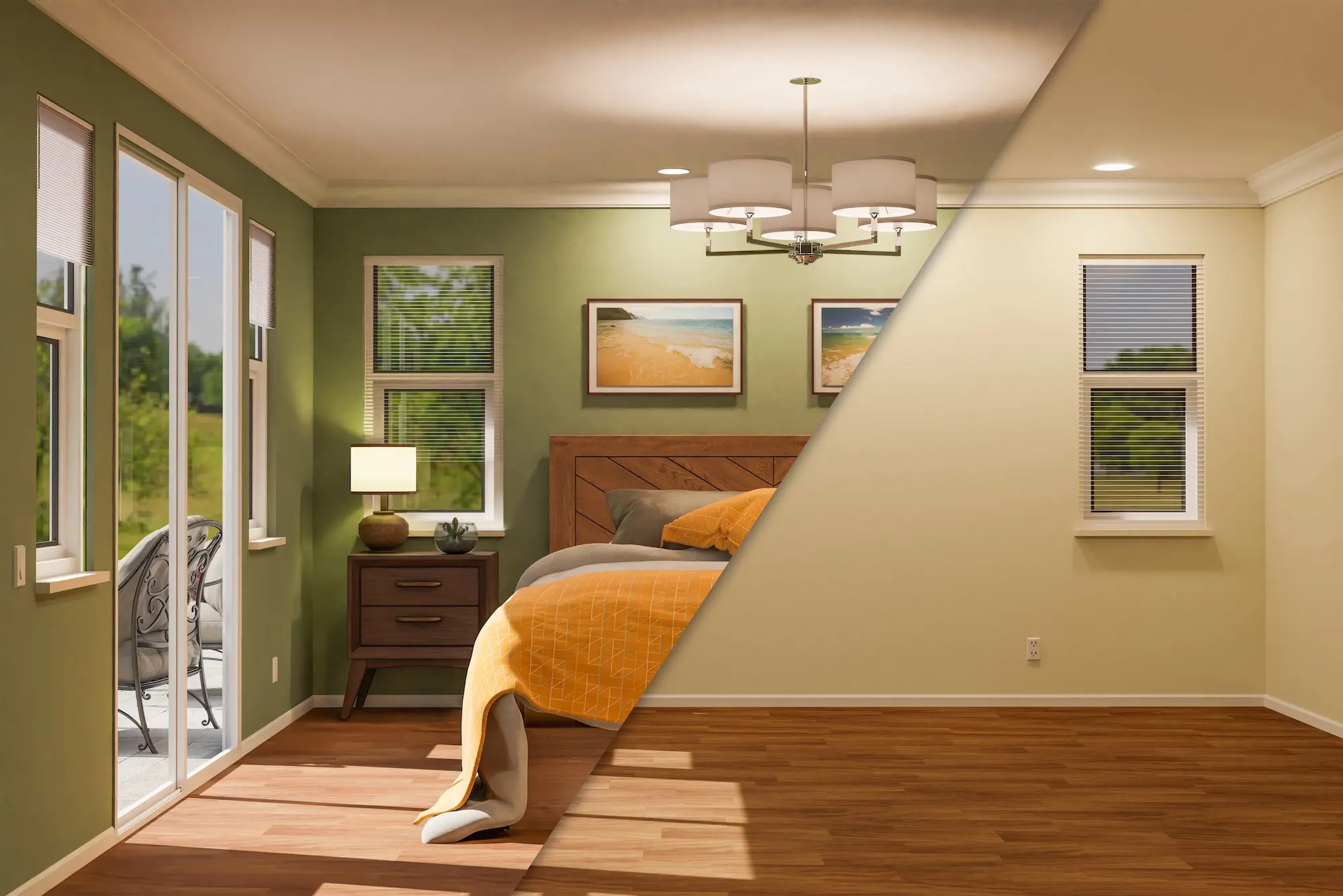
Your next lease is approaching, and you face a key decision: furnished or unfurnished? This choice impacts your finances, comfort, and peace of mind. Choose poorly, and you risk incurring unexpected costs, settling for an unsuitable living space, or facing the hassle of unwanted furniture.
Key Takeaways
- Furnished apartments typically cost 15-30% more but can save you thousands on furniture and moving costs.
- Unfurnished units offer better long-term value, especially if you're staying for 18+ months or already own furniture.
- Furnished rarely means fully stocked, so always ask for an itemized inventory before signing.
- Document the condition of every item at move-in to protect your deposit from surprise charges.
- Get renter's insurance because your landlord's policy won't cover your belongings or liability.
Calculate Your Breakeven Point
Furnished apartments usually cost 15-30% more than unfurnished ones, so if an unfurnished apartment costs $2,000 per month, a furnished one might cost between $2,300 and $2,600 per month. Over the course of a year, this difference can add up.
Furnishing a basic 1-bedroom unit with a bed, sofa, and table can cost thousands, and you'll also need kitchen essentials, which can add $500 to $800, plus moving fees. Overall, you might spend more than $8,000 upfront if you're starting from scratch.
To make a fair comparison, do a breakeven analysis of your situation:
- If furnished rent is $400 higher and you'd spend $3,200 on furniture, you'll break even in 8 months.
- If you stay longer than 8 months, the unfurnished option will start saving you money.
- If you already own furniture, your breakeven point could drop to 4-5 months since you won't spend as much on new items.
Pro Tip: If the additional rent for the furnished unit is lower than your furniture budget, it could be a wise choice. Otherwise, renting an unfurnished place might save you money in the long run.
Match the Lease Length to the Smarter Option
Your life situation and future plans affect whether a furnished or unfurnished apartment is better for you. If you are relocating for a short-term job assignment or to explore a new city for a few months, a furnished apartment is often the best choice. You can move in with just your suitcase and avoid the hassle of buying and moving furniture.
An unfurnished apartment is usually more economical if you plan to stay for two years or more. Lower monthly rent saves you money over time, making it worthwhile to buy your own furniture. You can also personalize your space with items that reflect your style.
Here's a quick breakdown based on lease length:
- Under 6 months: Always choose furnished. You won't recover furniture costs quickly, and moving twice is expensive.
- 6-12 months: Furnished usually makes more sense unless you already own the necessary furniture.
- 12-18 months: This is a tricky area. If you have furniture, unfurnished might be better. If you need everything, furnished might be the way to go.
- 18+ months: Unfurnished is usually the better choice. You pay less rent, and you own your furniture, saving money in the long run.
Pro Tip: If your plans are uncertain, ask about month-to-month furnished leases. It's a low-commitment way to test a new location without a significant furniture investment.
Designing Your Space vs. Living with Someone Else's Choices
What makes a place feel like "home" to you? In a furnished apartment, you get the landlord's style, which may include furniture you don't like, is uncomfortable, or doesn't meet your needs, like a small desk if you work from home. You can add personal touches, such as rugs and artwork, but generally not larger pieces of furniture. This can make your living space feel temporary and less personal.
On the other hand, an unfurnished apartment gives you a blank canvas. You can choose every piece of furniture and decor to reflect your taste and needs. If you own furniture you love or enjoy interior design, an unfurnished unit is the best choice. You can invest in quality pieces that you can take with you when you move, making your belongings more valuable and cost-effective in the long run.
Pro Tip: If you like the location but not the furnishings, ask the landlord if they're willing to remove or swap them. Some landlords are flexible, especially if it means securing a good tenant.
Don't Overpay for Convenience You Don't Need
Be cautious about hidden costs that can catch you off guard, especially with furnished rentals:
- Security deposits: Many states allow 1.5 to 2 times the rent for furnished units. California allows up to three months for furnished units versus two months for unfurnished units.
- Cleaning fees: Some leases require professional cleaning upon move-out, typically ranging from $200 to $400.
- Pet restrictions: Furnished units are more likely to have pet bans or charge fees ranging from $500 to $1,500.
- Damage Liability: If you damage the landlord's property, such as their couch or TV, your renter's insurance may not cover the cost. That's your bill to pay.
- Incomplete "furnishings": Some "furnished" units only include big pieces, leaving you to spend $500-$1,000 on basics like cookware, linens, or lighting.
Furnished units are ideal when time is tight or your stay is brief. But if you're paying a premium for mismatched, low-quality furniture or still spending hundreds to fill the gaps, you're not buying convenience. You're overpaying for a shortcut you don't need.
Pro Tip: Ask for an itemized inventory before signing. "Furnished" can mean anything from a complete setup to just a bed and couch.
Document Everything or Risk Losing Your Deposit
For furnished apartments, conduct a thorough move-in inspection to ensure everything is in order. Take photos of every item, especially high-risk pieces like sofas, mattresses, and tables. Email the file to your landlord within 48 hours to create a timestamped record.
Ask for a written inventory that includes:
- All furniture and appliances with condition notes
- Brand names and serial numbers (for electronics or valuables)
- Confirmation of extras (cookware, linens, Wi-Fi, etc.)
For unfurnished apartments, don't assume appliances or fixtures will be included just because you saw them during the tour. Confirm in writing what's included: fridge, stove, washer/dryer, blinds, lighting, etc.
Pro Tip: Always visit the actual unit you'll be renting, as model apartments and photos may not reflect the exact condition and quality of the furniture.
Conclusion
If you're starting fresh on a short-term lease or need a hassle-free landing pad, furnished can save you thousands upfront and spare you the headache of setting up furniture. However, if you're putting down roots, already own furniture you love, or want complete control over your space, opting for unfurnished is the smarter long-term move.
The best choice isn't just about money. It's about matching your decision to your life stage. If you're in exploration mode, furnished gives you the flexibility to pivot. If you're in building mode, unfurnished lets you invest in your future comfort. Choose based on where you are, not where you think you should be.