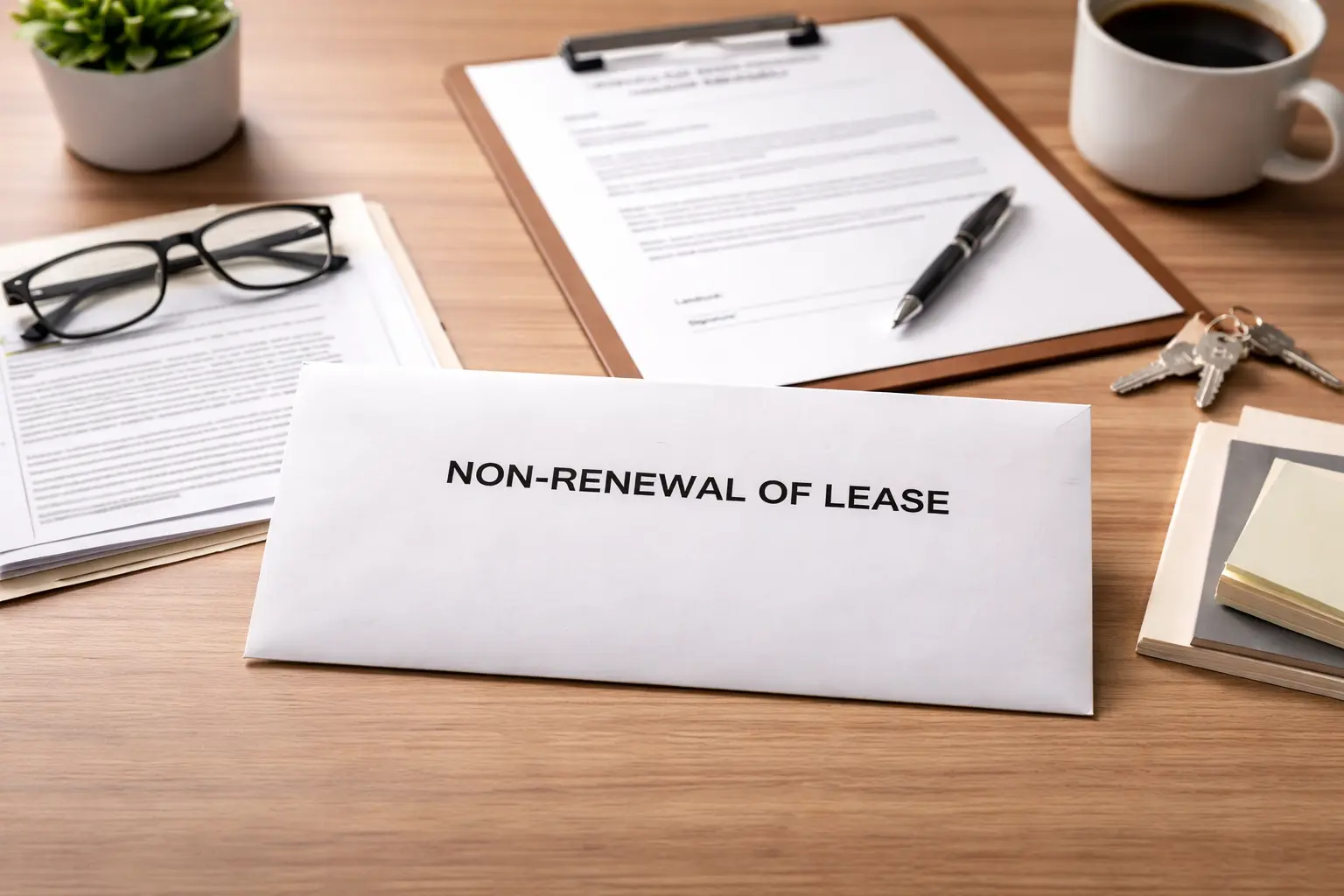

A minor violation rarely stays small. That "just for a week" extra occupant becomes steady traffic, a "friendly" pet turns into a $2,000 flooring bill, and a noise issue you let slide pushes out your best neighbor. Once the relationship sours, every text, delay, and exception starts looking like evidence. You don't need to win an argument. You need a repeatable process that fixes behavior early, preserves your options, and still reads as fair if a judge, mediator, or agency reviews your file later.
Key Takeaways
- Write everything as if a stranger will review it later and judge your fairness.
- Anchor each message to a lease clause, a date, and proof you can share.
- Use the wrong notice or timeline, and you may restart the clock.
- Enforce the same rule the same way across comparable situations or document the reason for an exception.
- One calm, written demand tied to the lease often works faster than debating by text.
Confirm the Violation and the Controlling Lease Clause
Identify what you're dealing with before you accuse anyone of anything. If you mislabel the problem, you'll waste time and may create avoidable legal exposure.
Start by putting the issue in the right bucket:
- Lease violation: a clear promise was broken, such as an unauthorized occupant staying long enough to be considered a resident, smoking in a non-smoking unit, running a business with client traffic, keeping a prohibited pet, or refusing lawful entry after proper notice.
- Maintenance issue: the home needs a repair that is driving the complaint, like a failed bathroom fan contributing to mildew.
- Normal wear and tear: ordinary aging, like faded paint or a loose hinge.
- Neighbor dispute: a complaint you still need to verify, like "they're loud" with no dates or times.
Then confirm your authority by pulling the specific lease clause and any relevant addenda (e.g., parking, pets, smoking, quiet hours). Check local regulations that may override the lease, such as rent control, just-cause ordinances, and fair housing rules, as these can limit your actions and timelines. Use the lease as your baseline, but ensure compliance with local requirements before proceeding.
If the facts are unclear, take your time to verify details such as dates, times, and locations through lawful inspection or third-party records. Avoid treating an assistance animal as a pet; instead of debating pet policies, initiate a reasonable accommodation process and adhere to fair housing regulations, especially when the disability isn't obvious.
Pro Tip: Paste the lease clause into your incident notes before you contact your tenant so every message stays anchored to the contract, not your frustration.
Build a Defensible Incident File
Confirm whether you have proof that holds up under a skeptical review or just a strong feeling. When things escalate, you're never punished for being organized, but you can be penalized for being disorganized.
Your documentation needs to answer three questions: what happened, when it happened, and how you responded. Use the same standard across all units so you can show you enforce rules based on behavior, not personal traits. When you're stressed, consistency keeps you from improvising.
Collect proof that is dated, clear, and lawful:
- Photos or videos of what you can legally observe, like trash overflow at the door, a prohibited grill on a balcony, or an unauthorized vehicle in a fire lane.
- Same-day notes with time, location, who was present, and what you personally observed.
- Vendor notes describing conditions and likely cause, like "urine odor present, carpet saturated," or "tenant refused entry after 24-hour notice."
- Third-party records, such as security logs, gate records, or a police incident number, are relevant.
- A communication log showing what you sent, when you sent it, and how you sent it.
Keep your proof clean. Don't look for personal details that don't affect the lease breach. Also, be careful with recordings. Recording laws vary (one-party vs two-party consent). Don't record calls unless you know your state's rules.
Organize each violation as one "incident packet" (one folder or one PDF) so you can hand it to your attorney, mediator, or a judge without scrambling:
- Lease clause and section number
- Timeline of events
- Evidence attachments
- Copies of warnings or notices
- Your cure demand and how you will verify it
Pro Tip: Keep original files untouched, then create a separate "share" copy for counsel, court, or your tenant so you can show nothing was altered.
Use the Correct Notice and a Measurable Cure
Decide what you're demanding and whether your local rules allow it. You can be entirely right about the behavior and still lose weeks if you use the wrong notice or timeline.
Match the violation to the notice your jurisdiction requires. Names and deadlines vary by state and city, but most fall into these buckets:
- Pay-or-quit for past-due rent
- Cure-or-quit for fixable breaches like unauthorized occupants, pets, trash, parking, noise, smoking, or access refusals
- Notice to quit without cure for serious conduct in some jurisdictions, often tied to safety or illegal activity, and sometimes limited to repeat events
- Nonrenewal notice, where allowed, which may be restricted in "just cause" areas
Set a cure deadline that is lawful and realistic. If you demand the impossible, you can look unreasonable and weaken your case. A better posture is firm and measurable. You're asking for compliance, not a confession.
Keep the notice tight and factual. Include only what you can prove. Don't pile on extra claims because you're irritated. Every extra allegation becomes another point your tenant can attack.
Use this structure so your notice reads like a professional record:
- Tenant names, address, and date
- Lease clause and section number
- Specific facts with dates and times
- The exact cure action required
- How you'll verify compliance
- The cure deadline is based on local rules
- What happens if it's not cured, including eviction where permitted
- A way to respond in writing
Make the cure measurable. "Stop being disruptive" is vague. "No amplified music audible outside the unit after 10 p.m. per Lease Section X" is enforceable.
Pro Tip: Add one verification line that forces clarity, like "Email a photo showing the balcony is cleared" or "Confirm a reinspection window between 9 a.m. and 12 p.m. by Friday."
Serve Notices With Proof And Track Deadlines
Determine how you'll prove delivery and when the clock started. A lot of enforcement fails on service, not substance.
Confirm your service rules before you serve anything. Some places require personal service attempts before posting. Some require posting plus mailing. Some allow email only if your lease and local rules support it. When you get service wrong, you often have to start over, and you may have to give your tenant extra time.
Use service methods that create usable proof when allowed:
- Process server service with an affidavit or return of service
- Certified mail with tracking, mailing receipts, and a copy of what you sent
- Posting with a time-stamped photo and a written service note, plus follow-up mailing if required
- Signed acknowledgment if your tenant is willing
Keep track of deadlines in a place you regularly check. Log the service date, cure deadline, and earliest filing date, noting your jurisdiction's rules for counting days, as some may exclude weekends, holidays, or add mailing days. Missing by a day means missing the deadline.
Avoid self-help measures such as changing locks or removing belongings without a court order, as these may result in penalties. Stick to procedural documentation; simply posting a notice and taking a photo isn't sufficient if a tenant claims they didn't receive it. Always include mailing receipts or service notes to ensure you can enforce the lease effectively.
Pro Tip: Build a reusable "service packet" checklist, then save it with the proof photo, mailing receipt, and a calendar screenshot so you can defend your timeline in 30 seconds.
Communicate Like Your File Will Be Audited
Decide how you'll enforce the lease without creating an opening for discrimination or retaliation claims. Your goal is simple. Your messages should read the same no matter who the tenant is.
Pick channels that protect you. Use email for a clean written record, plus mailed notices when required. Keep texts for logistics only, like confirming an inspection window. Text threads are where tone slips and inconsistent promises show up.
Use a consistent script that sticks to facts:
On [date], I observed [specific issue], which appears to violate Lease Section [X]. Please correct it by [deadline]. If you believe this is incorrect, respond in writing by [date] with any details I should review.
When your tenant replies hot, don't match the heat. Validate, then return to the contract:
I hear you. I'm going to stick to the lease and what I can verify. Here's what needs to happen by [deadline], and here's how we'll confirm compliance.
Be mindful of timing when dealing with high-risk situations. Retaliation claims often occur when enforcement actions are taken immediately after a tenant submits a repair request or a request for disability-related accommodations. If a tenant asks for an assistance animal, switch to a reasonable accommodation review. Use relevant fair housing guidelines to ensure that you do not ask for unnecessary details.
Consistency is key. Apply the same rules to similar situations. If you make an exception, note the reason, such as a medical emergency or vendor delay beyond the tenant's control.
Pro Tip: Before you hit send, delete anything that sounds like motive or judgment and leave only dates, observable facts, and the lease clause.
Escalate With Thresholds, Not Emotion
Decide whether you're filing, negotiating, or offering a structured last chance. Escalation should feel heavy. You're not overreacting for taking it seriously, and you're not weak for wanting an off-ramp.
Set thresholds so you don't swing between anger and avoidance:
- Escalate quickly for safety risk, threats, violent conduct, or significant property damage, while still following local notice rules.
- Escalate after a missed cure deadline when your demand was lawful, measurable, and documented.
- Escalate after repeat breaches when you can show a pattern with dates, notices, and follow-ups.
Then choose the route that aligns with your evidence and market realities.
- File for eviction: when the tenant will not cure, your documentation is strong, and you can tolerate the local timeline. Confirm your eviction timeline by calling the clerk, checking the court's published dockets, or asking local counsel when they're scheduling first-hearing dates.
- Offer a written compliance plan: when you want to keep the tenancy but need structure. Put check-in dates, inspection terms, and consequences in writing. A verbal "last chance" turns into a memory contest when stress spikes.
- Negotiate a move-out agreement: when speed and certainty beat principle. Keep it transparent and accurate. FTC consumer protection basics are a good gut check for your process. Do not mislead, do not hide terms, and do not pressure a signature on the spot. Put the date, money, unit condition checklist, and key return requirements in writing.
You've probably lived this: your tenant keeps saying they'll "be out soon," and three weeks later, you're still in limbo. A written move-out agreement with a firm date ends the drift.
Pro Tip: Write your escalation triggers now, like "second documented violation in 90 days" or "missed cure once," so you're not renegotiating your standards mid-conflict.
Conclusion
Lease violations feel personal because they disrupt your property and your peace of mind. It's also normal to feel torn when the tenant is usually fine, and the situation is messy. The response that holds up is procedural. When your actions are repeatable, calm, and provable, you stop negotiating from emotion and start negotiating from evidence.
One final nudge that saves real money: tighten your process after the first resolved violation, not after the blowup. Update lease language at renewal, confirm rules in writing, and standardize how you document the next complaint. Most "surprises" are patterns you did not capture early. Your job is to make the next step obvious, lawful, and easy to defend, even if the relationship gets tense.